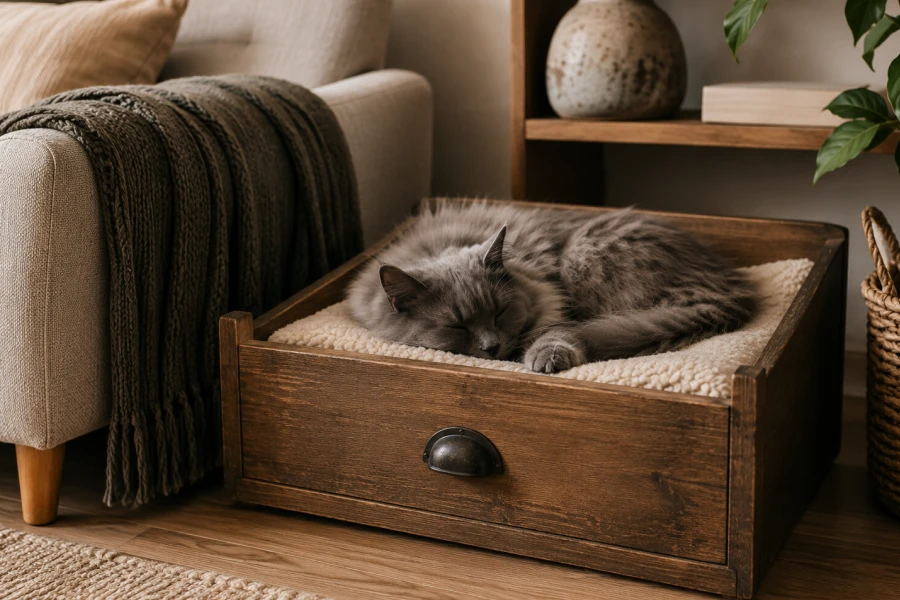
A stylish home does not need to choose between pet comfort and good design. A repurposed furniture cat bed lets both ideas live together. It gives your cat a private place while keeping the room visually calm. Old furniture becomes useful again instead of collecting dust. The project also feels more meaningful than buying another generic pet bed. You can shape the space around your cat’s habits. You can match the finish to your décor. Most importantly, you create something that feels personal.
Cats often prefer furniture over store-bought beds because furniture feels stable and familiar. A drawer, cabinet, or small table already carries the scent and rhythm of home. That familiarity makes the transition easier. With smart padding, safe edges, and a calm location, the piece becomes a true retreat. A stylish cat furniture alternative also helps owners avoid visual clutter. Instead of adding another object, you improve one that already belongs in the room.
Not every item deserves a second life as a pet bed. Look for solid structure first. The piece should not wobble, tip, or trap your cat inside. Avoid anything with chipped paint, chemical smells, or fragile panels. Size matters as much as style. Your cat should turn around comfortably and stretch without feeling squeezed. A low cabinet may suit older cats. A drawer insert may work for smaller cats. Good choices make the final result safer, prettier, and easier to maintain.
The best design supports daily behavior. If your cat likes watching people, place the bed near a family area. If your cat prefers silence, choose a bedroom corner or reading nook. Add bedding that washes easily. Keep the entrance open enough for relaxed movement. Consider a removable liner for cleaning. A furniture repurposing for cats project should feel practical after the first week. When daily use stays simple, the nook remains part of your routine.
Cats notice small discomforts quickly. A cushion that slides may discourage use. A rough edge can make entry unpleasant. A dark enclosed space may feel secure for one cat and stressful for another. Test the setup before calling it finished. Let your cat explore without pressure. Add familiar bedding if the nook feels too new. Place treats nearby, not deep inside. This helps curiosity build naturally. Comfort is not only softness. It is the feeling of control, safety, and easy exit.
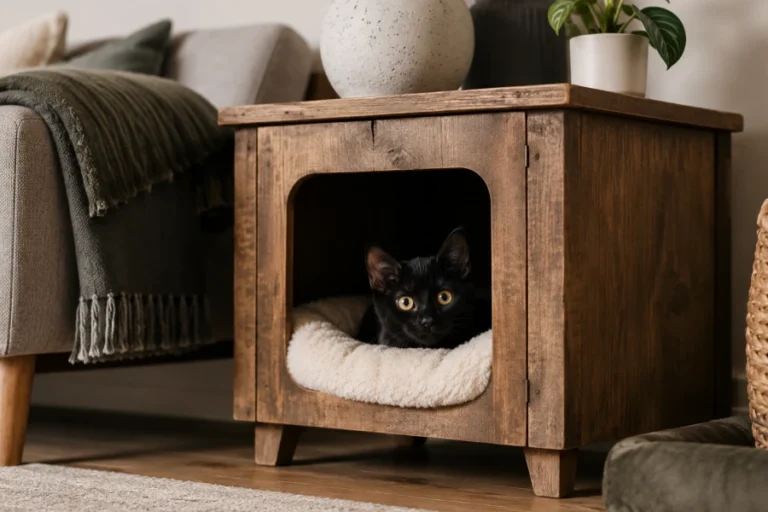
Many pet owners struggle with furniture overload. Beds, bowls, toys, scratchers, and carriers can quickly crowd a room. A hidden bed inside existing furniture reduces that visual pressure. It also works well in apartments, shared homes, and smaller bedrooms. A small-space cat nook gives your pet territory without making the home feel busy. This balance matters because cats need dedicated spaces, but owners still need rooms that feel livable.
A refined finish makes the project feel intentional. Use simple fabric, tidy edges, and colors that repeat elsewhere in the room. Avoid novelty patterns unless they match your style. Paint can refresh a tired piece, but choose pet-safe options and allow full curing time. Hardware should sit flush and secure. If the entrance needs a cutout, keep the shape smooth and balanced. The goal is quiet design. Your cat gets comfort, while your home keeps its rhythm and personality.
Success usually appears slowly. Your cat may sniff the bed, ignore it, return later, and finally claim it. That is normal. Do not move the piece too often during the adjustment period. Keep bedding consistent. Reward curiosity gently. Once your pet chooses the space, the project feels deeply satisfying. A simple cat comfort corner can become part of your cat’s daily emotional security. That is the real charm of repurposed design.


Leave a comment