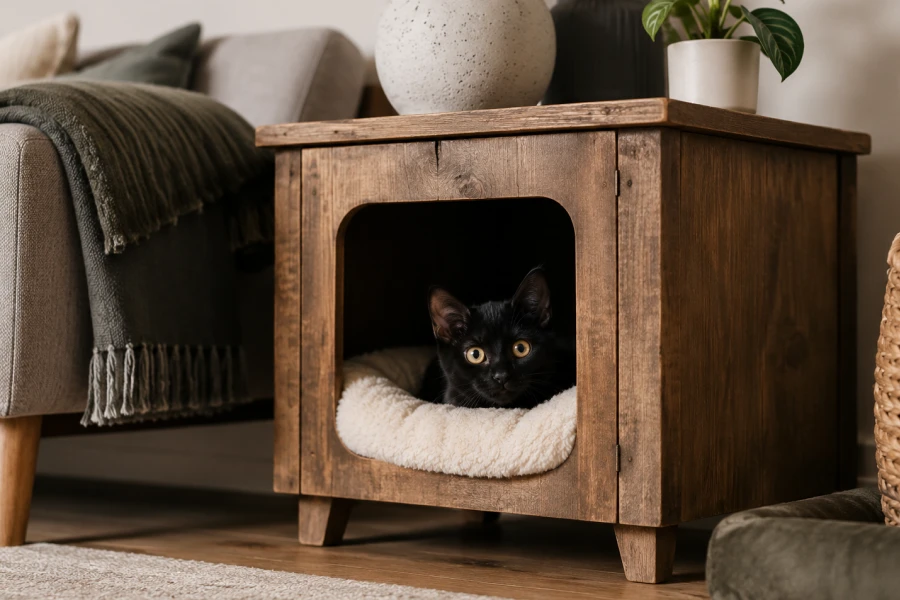
Every cat has a favorite hiding place, but few homes plan for that need with intention. That is where diy cat nook furniture becomes more than a cute project. It gives your cat privacy, warmth, and security without adding bulky pet furniture. A cabinet, drawer, bench, or side table can become something useful again. The idea feels practical because it works with what you already own. It also keeps your home looking polished. Instead of buying another scratch-prone structure, you create comfort inside your existing style.
Cats love spaces that feel protected but not isolated. A good nook gives them a soft retreat while keeping them near household activity. This makes the project feel thoughtful rather than decorative. A cat-friendly furniture makeover can also help nervous pets settle faster. The best designs consider your cat’s size, habits, age, and preferred sleeping positions. When the nook fits those details, your cat accepts it more naturally. Personal design always beats random placement.
The strongest projects begin with observation. Notice where your cat already hides, naps, or watches the room. Then look for furniture nearby that can be safely adapted. A low cabinet may work well in a living room. A sturdy bench can fit beautifully near a sunny window. A bedside table may suit a quieter cat. The goal is not to force a new behavior. The goal is to turn an existing preference into a better space. That keeps the project simple and more successful.
A beautiful nook fails if it feels unstable, cramped, or unsafe. Before changing any furniture, check for sharp edges, loose screws, peeling finishes, or weak panels. Avoid materials that splinter easily. Make sure the entrance feels wide enough for relaxed movement. Add ventilation when the space has enclosed sides. Soft bedding matters, but it should be washable and easy to remove. A safe cat nook design protects both your pet and your home. Comfort should never depend on guesswork.
Small apartments often make pet furniture feel impossible. A cat tree may dominate one wall. A bulky bed may sit unused in the corner. Repurposed furniture solves that problem with hidden function. You gain a pet zone without losing floor space. The cat gains a retreat that blends into daily life. This is especially useful for renters or anyone with minimal storage. A smart nook can sit inside a console, shelving unit, or unused drawer frame. Practical design makes small spaces feel calmer.
Cats respond strongly to texture and temperature. Some prefer plush bedding. Others like firmer padding or a folded blanket. Sunlight can make a nook more appealing, but too much heat may push your cat away. Placement near a window works best when shade is available. Noise matters too. A laundry area may look convenient, but sudden sounds can ruin the experience. A cozy cat hideaway should feel peaceful, clean, and easy to enter. Details turn a project into a habit.
The finished piece should feel like part of your home, not a last-minute craft. Match bedding colors to nearby textiles. Use simple trim if the cutout looks rough. Keep the entrance clean and balanced. Avoid overdecorating the exterior, because cats usually care more about comfort than visual drama. You can still make the piece charming with subtle choices. A neutral cushion, smooth opening, and tidy placement make the nook feel designed. The best pet projects disappear into the room beautifully.
Even the prettiest nook needs regular care. Shake out bedding weekly. Vacuum fur from corners. Check for odors after damp weather. Wipe surfaces with pet-safe cleaners. Watch for signs that your cat avoids the space. That may mean the cushion moved, the entrance feels awkward, or the location became too noisy. A simple hidden pet retreat stays useful when it stays fresh. Maintenance protects the effort you put into the transformation.


Leave a comment